- Sep 24, 2025
The Picture in the Attic: What We Hide from the World
This term, I decided to shake things up in my introduction to academic writing course. I have my trusted staples, of course—the core readings on the mechanics of good writing that I can’t do without. And for the past few years, I’ve had students engage with the brilliant work of Chimamande Ngozi Adichie, Tanya Talaga, and Rupi Kaur. This year, however, I reached back a little further, to a classic of Western literature: Oscar Wilde’s The Picture of Dorian Gray.
My thinking, at first, was purely practical. The novel, first published in 1891, is an incredible study in visual imagery, and I thought it would be a good anchor for our first module on narrative writing. But as anyone who has spent time with the book knows, it’s about so much more than a painting. Wilde’s work is a masterclass on the fractures within the human spirit, that constant war each of us wages with ourselves.
For those who haven't had the pleasure, the story centers on Dorian Gray, a young aristocrat whose beauty is the talk of London society. An artist friend, Basil Hallward, is obsessed with this beauty and captures it in an exquisite portrait. When the painting is finally revealed, Dorian is overcome. He’s not just struck by its likeness, but by the sudden, cold realization that this painted version of him will remain perfect while his own youth and good looks will one day fade.
Into this moment of existential dread steps Lord Henry Wotton, a character whose witty, cynical philosophy hangs over the entire novel. He encourages Dorian to embrace his fleeting youth, to live a life of pure sensation and hedonism. Spurred on by this, Dorian makes a dark, Faustian wish: that the portrait would age and show the marks of his sins, while he himself would remain eternally young and beautiful.
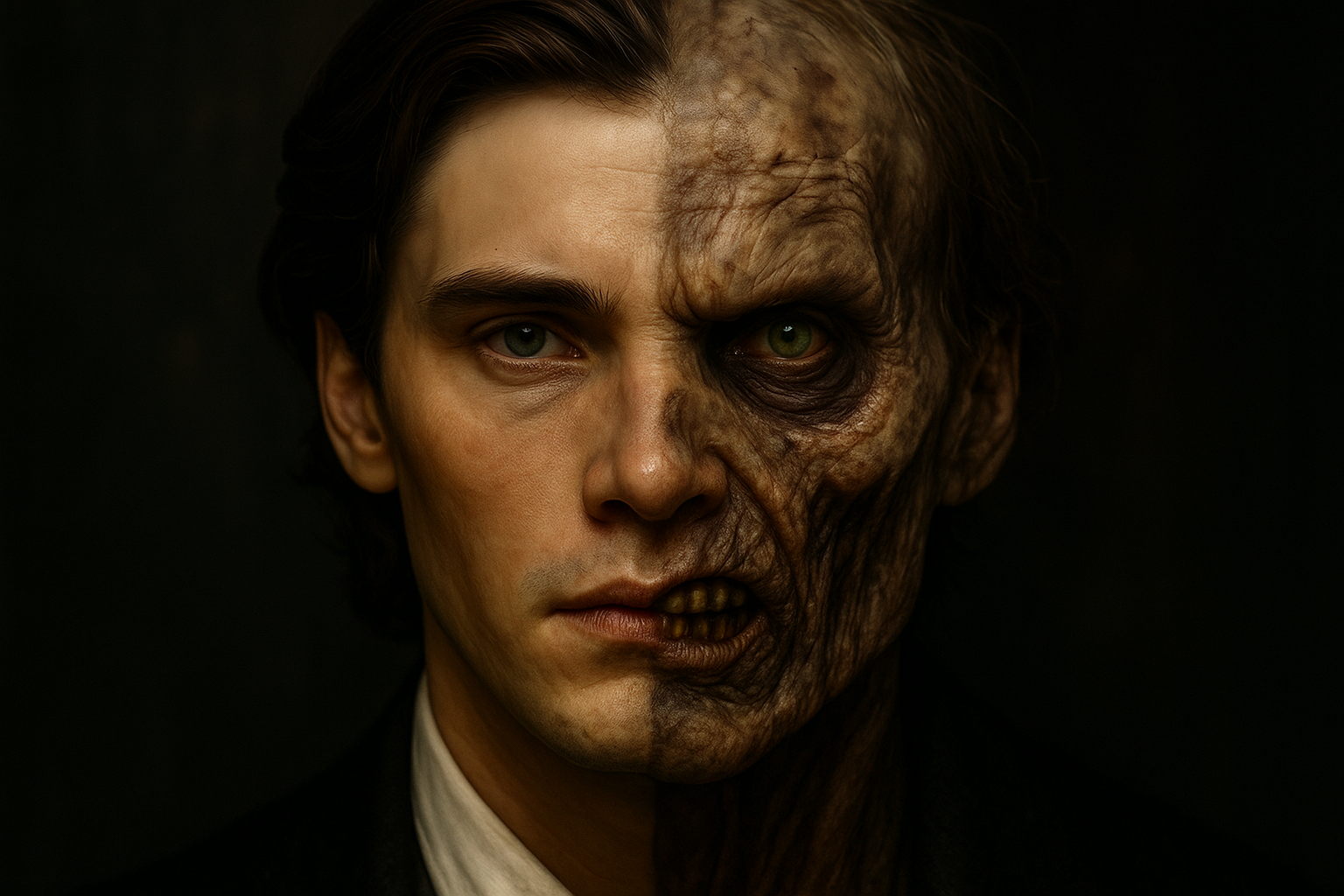
His wish comes true. The rest of the novel follows Dorian’s downward spiral into a life of debauchery and moral decay. On the outside, he remains untouched, a perfect picture of innocence. But the portrait, hidden away in an attic, becomes the canvas for his soul. With every corrupt act, the face in the painting twists and grows more grotesque, a visual record of the man he has truly become. Wilde’s premise is a fascinating exploration of how far we might go to preserve the face we show the world—a theme that feels just as urgent today as it did more than 130 years ago.
The Prison Forever
Dorian’s wish for eternal youth naturally sparked a debate in my classroom. I posed the question to my students: would any of them make the same deal? A few hands shot up. The prospect of keeping one’s beauty and vitality forever is a powerful lure, after all. But as we dug into it, their certainty began to waver. I pointed out that so much of what we value in life—a beautiful sunset, a fleeting moment of joy, even life itself—derives its meaning from the fact that it doesn't last. Our entire system of value is fundamentally tied to scarcity; when something is infinitely abundant, its value approaches zero.
To illustrate, I offered them a thought experiment: imagine an infinitely long sandwich. For the first few bites, it might be the most delicious thing you've ever eaten. But a week later? A year? A million years into eating the very same sandwich, you’d still have no way of knowing if it was truly good, because the experience would never resolve into a complete, final memory. The pleasure would curdle into a kind of torture.
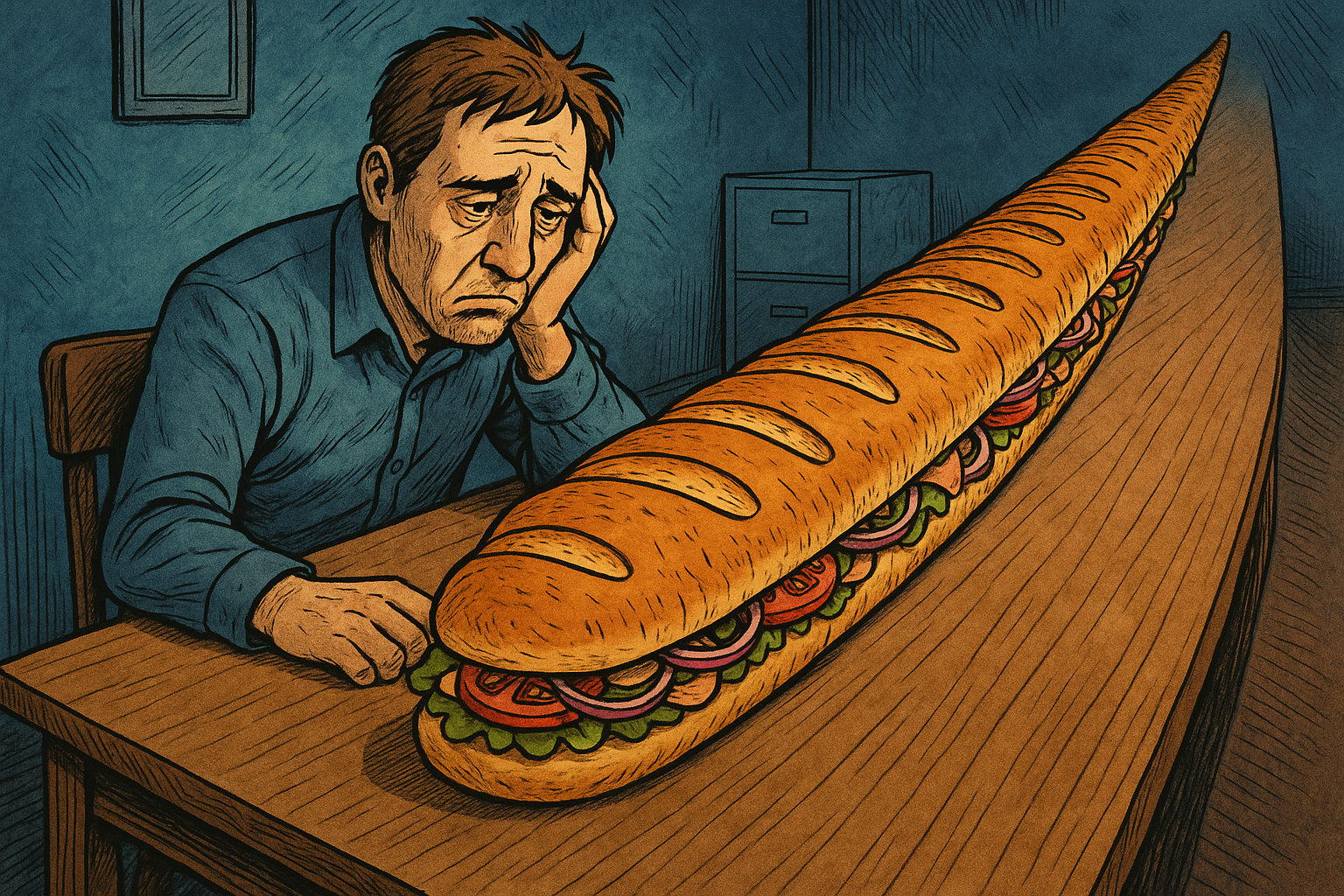
This is precisely Dorian Gray's curse. His life becomes that infinite sandwich. With no end in sight, no physical consequences to mark the passage of time, his choices lose their weight. His youth, once a precious and finite resource, is now guaranteed. It becomes valueless. And so, he begins to treat his own life, and the lives of those around him, as equally worthless. He had an eternity to get things right, and with no deadline, there was no urgency to be good. Why be virtuous today when there are infinite tomorrows?
Just as the class started nodding along, convinced that immortality was a prison, I flipped the script. “Okay,” I said, “let’s imagine immortality is the default state for humans. Now, who here would choose to die next year?”
The room went silent. No one raised a hand. Suddenly, a finite life didn’t seem so appealing when it was presented not as a given, but as a choice. It’s a fascinating paradox. We seem to be creatures built to desire the state we don't possess. Our mortality makes us dream of forever, but perhaps living forever would make us long for a meaningful end. Wilde understood this perfectly; Dorian's tragedy isn't just that he becomes wicked, but that in trying to escape a fundamental human limit, he loses his humanity altogether.
The Unchanging Face of Temptation
Our modern world is saturated with the promise of perpetual youth. From targeted ads to social media filters, the message is clear: aging is a problem to be solved. But as Oscar Wilde so powerfully reminds us in The Picture of Dorian Gray, this is hardly a new obsession. The pursuit of eternal vitality has plagued us for some time; one need only look back to the Greek myth of Narcissus, captivated by his own reflection, to see that this is a story thousands of years old. And the cautionary tale always ends the same way: the price for attaining this impossible standard is the loss of one’s soul.
I’ve written on this blog before about how our popular films often frame the pursuit of perfection as a direct path to a dystopian outcome, and I’ve also shared my own, more personal, reflections on mortality as a man now gradually getting "up there" in age. The desire to hold onto some sliver of youth and vitality is not an abstract concept for me. Like Dorian, I feel the pull of that wish. But Wilde’s novel serves as a chilling reminder of the potential cost. The real horror isn't getting wrinkles; it's the prospect of being warped into an unrecognizable version of yourself, a creature given over to every impulsive and hedonistic whim, simply because you no longer have to face the consequences in the mirror.
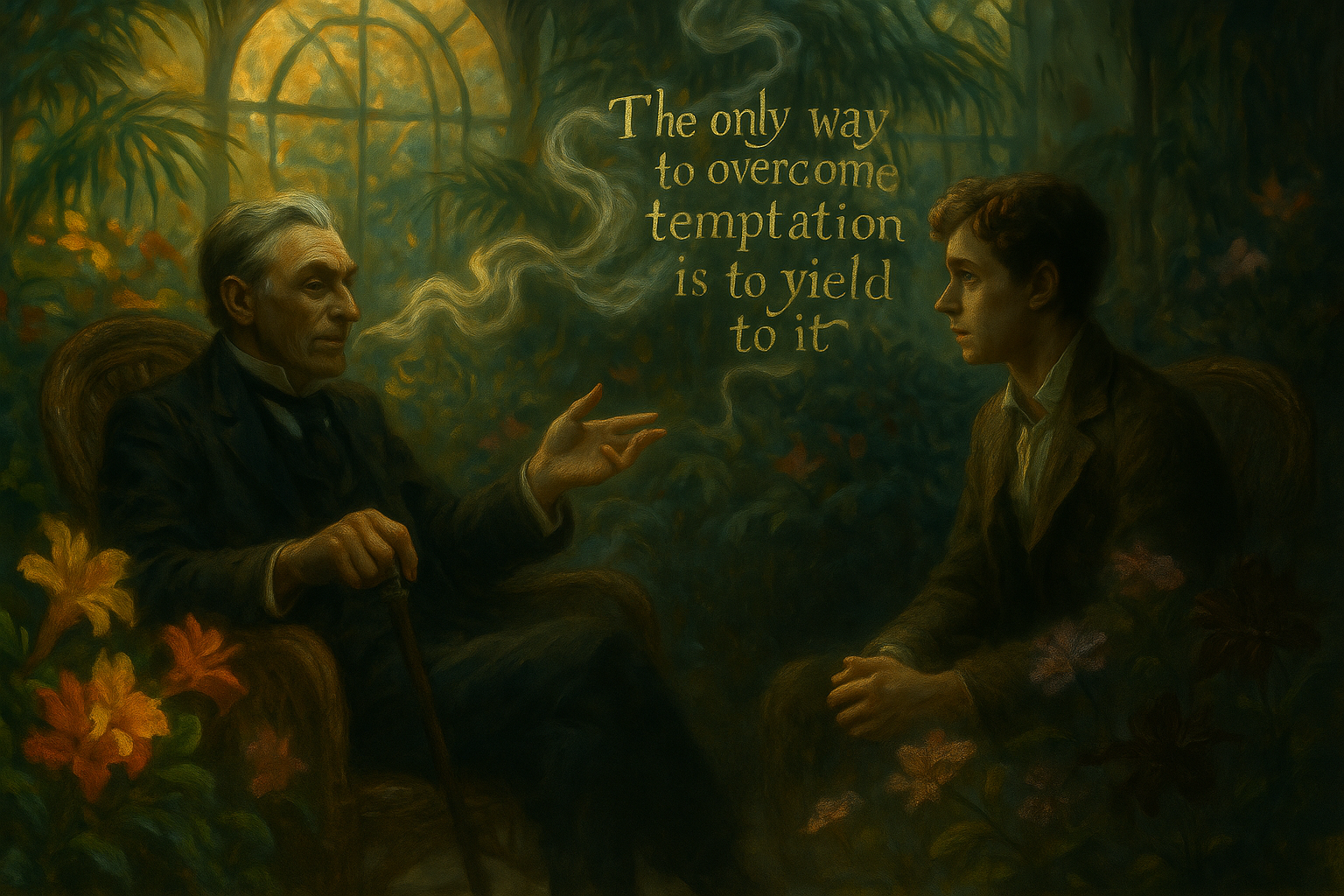
This led to one of our final discussions in the narrative module of the course which concludes this week. I asked my students if there was any truth to Lord Henry’s seductive suggestion that “the only way to get rid of a temptation is to yield to it.” There was a moment of thoughtful silence, and I could see the appeal of the idea flickering in a few eyes. It’s a compellingly simple philosophy. Ultimately, though, the consensus was that the freedom Lord Henry offers is a sham, and the moral fallout isn't worth the temporary release.
We, as humans, are in constant contention with these very issues—the struggle between our public face and our private self, between the person we want to be and the temptations that pull us off course. Seeing a new generation of students engage so deeply with these timeless questions through Wilde’s magnificent, haunting prose was an invigorating experience. I can only await the results of our discussion as we carry these ideas forward to our next reading: a very different, but no less relevant, exploration of the soul in Plato’s Apology.

For your interest, I've include a link to a recent lesson [hit the enlarge button in the bottom right hand corner]:
Join the mail list
Liked this blog? Consider signing up to get a notification for new posts.